
Biofuel Feedstock
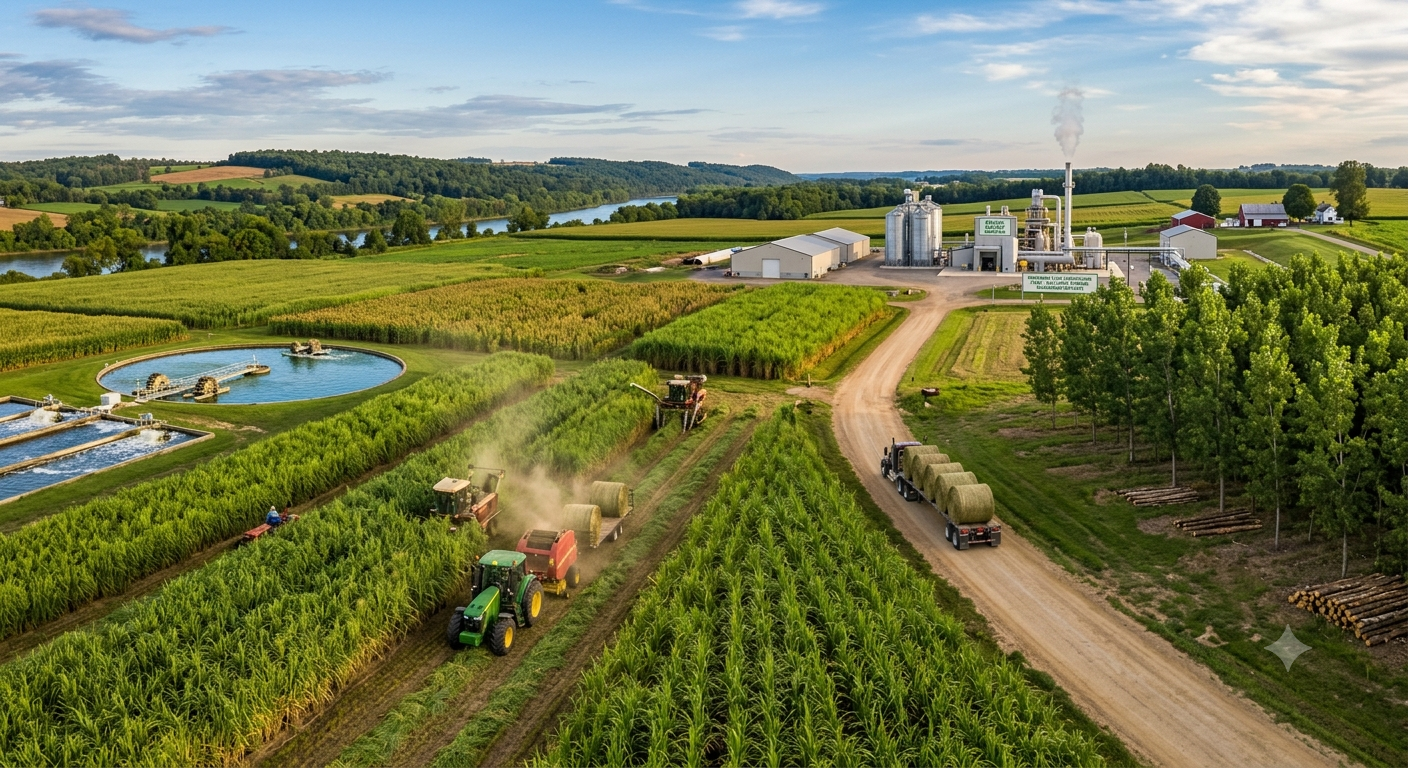
The global biofuel feedstock market in 2026 has transitioned from a traditional commodity agricultural sector into a critical asset class tied directly to energy security and environmental compliance.
Driven by stringent international carbon reduction targets, the expansion of Sustainable Aviation Fuel (SAF) mandates, and domestic tax incentives, feedstocks are no longer valued merely by volume, but by their audited life-cycle Carbon Intensity (CI) scores.
Market Valuation
Global Biofuel Feedstock Market:
Current Market Valuation (2026): $150.66 Billion
Long-Term Valuation (2035): Projected $271.84 Billion
Compound Annual Growth Rate (CAGR): 6.78%
North American Biofuel Feedstock Market:
Current Market Valuation (2026): $60.26 Billion
Long-Term Valuation (2035): Projected $108.74 Billion
Compound Annual Growth Rate (CAGR): 6.80%
United States Biofuel Feedstock Market:
Current Market Valuation (2026): $54.20 Billion
Long-Term Valuation (2035): Projected $96.51 Billion
Compound Annual Growth Rate (CAGR): 6.61%
Industrial Applications
Petroleum Refining and Fuel Blending: Traditional oil refiners represent the largest volume consumers, executing hydrotreating processes to convert crude fats and vegetable oils into drop-in Renewable Diesel and traditional biodiesel blends for commercial overland logistics—a sector comprising 86.9% of total downstream consumption revenue.
Commercial Aviation: Global air carriers represent the fastest-expanding consumption engine, scaling procurement of Sustainable Aviation Fuel (SAF) to meet strict international mandates. This vertical is expected to register a 35.5% CAGR in feedstock volume draw through the mid-2030.
Maritime Shipping: Global maritime logistics networks are rapidly adopting bio-derived heavy marine oils and biomethane to satisfy greenhouse gas limits imposed by international maritime authorities.
United States Strategic Position
Biofuel feedstock production has ascended to a core position within U.S. domestic economic policy and national security strategy:
Insulation of Energy Supply Lines: Local agricultural and waste feedstock networks function as a critical shield against geopolitical volatility in crude oil markets. By anchoring domestic production mandates through the Renewable Fuel Standard (RFS)—which sets biomass-based diesel targets at 5.53 billion gallons—the nation reduces reliance on foreign energy infrastructure.
Trade Protections and Verification Infrastructure: Market dynamics highlight this vulnerability. Substantial imports of foreign Used Cooking Oil (UCO) and tallow, primarily out of Asian logistics hubs, filled domestic storage infrastructure and pressured local agricultural margins. In response, domestic industrial coalitions pushed for rigorous supply-chain tracing under the Section 45Z Clean Fuel Production Tax Credit. Ensuring that tax incentives are coupled with strict domestic origin and life-cycle auditing prevents international market manipulation and fraudulent carbon accounting.
Rural Economic Optimization: Feedstock sourcing acts as a major economic anchor for the American agricultural sector. The biofuel sector absorbs nearly half of all domestic soybean oil production. The integration of structural initiatives like the USDA Regenerative Feedstock Rule ensures that energy transition capital actively underwrites infrastructure investments across rural communities—driving localized economic resilience, new crushing facilities, and enhanced manufacturing employment.